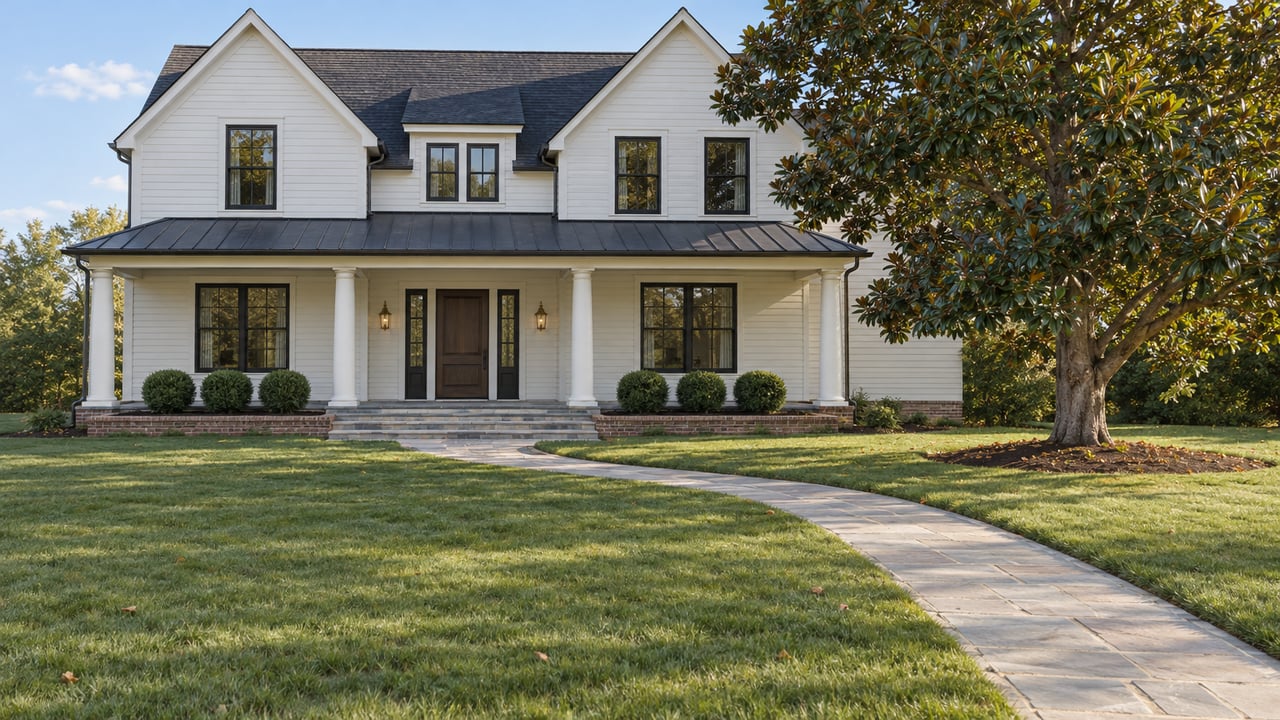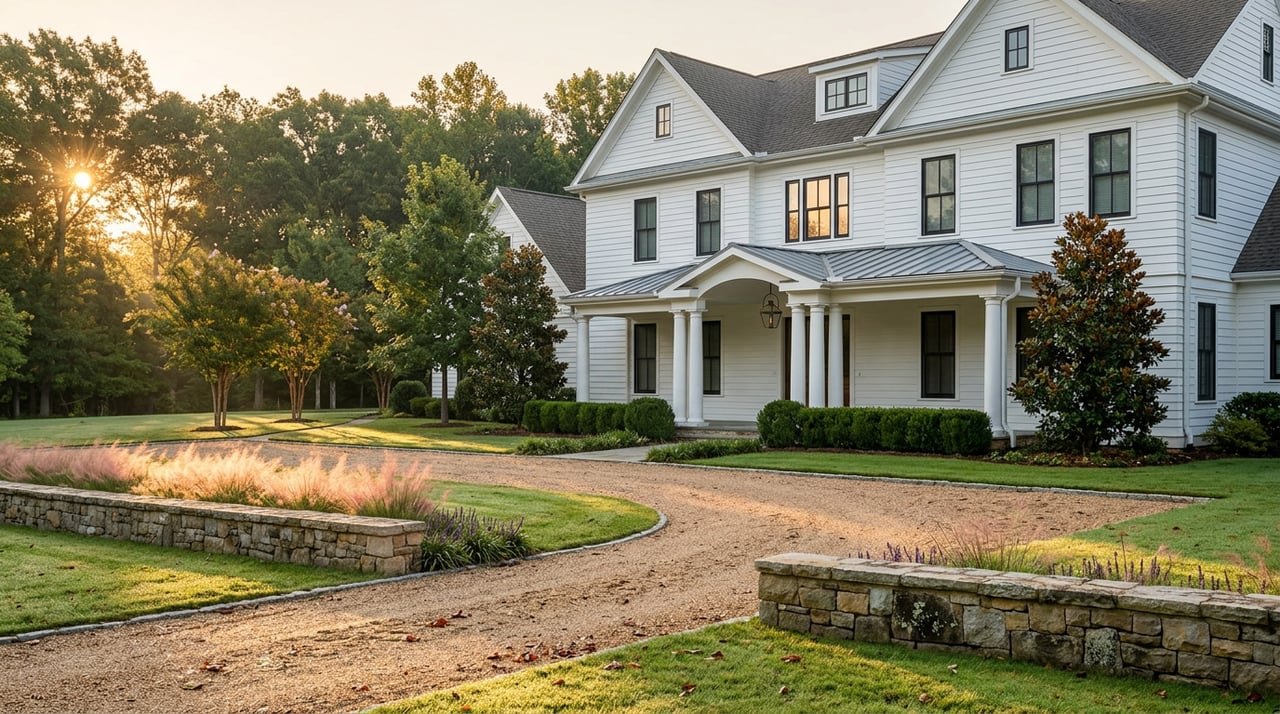
A builder puts up a six-bedroom estate on New Town Road. Custom millwork, a home theater, a guest wing over the garage. The listing photos will be gorgeous. But somewhere in a filing cabinet at Union County Environmental Health sits a permit from the era when that lot was still pasture, written for a smaller house that never got built, or for the four-bedroom farmhouse that stood there before someone tore it down. The North Carolina Real Estate Commission says that permit, not the floor plan, decides how many bedrooms the listing agent is legally allowed to advertise.
This is not a technicality that shows up once in a while. It is baked into how North Carolina regulates on-site wastewater, and it lands harder in Marvin than almost anywhere else in the Charlotte metro, because Marvin's housing stock runs unusually large on unusually large lots, most of them served by well and septic rather than municipal lines.
The rule nobody puts in the listing photos
The North Carolina Real Estate Commission has spent more than three decades telling brokers the same thing, in bulletin after bulletin: if a septic permit exists and states a capacity of three bedrooms, the property gets advertised as a three-bedroom home. Not four. Not five. Three, even if there are five rooms with closets and windows behind the front door. The Commission has published at least eight articles on this exact issue since 1993 because the complaints keep coming, usually from buyers who found out the hard way when they went to sell.
The logic is straightforward once you see it. A septic system is sized around expected wastewater flow, and the state calculates that flow off bedroom count, not square footage and not acreage. M Septic explains that under North Carolina's sewage flow rate rules, design flow starts at 120 gallons per day for each bedroom, with a 240-gallon minimum for a two-bedroom home. Every bedroom past two adds another 120 gallons a day to the number the system has to handle.
| Bedrooms | Minimum design flow (gal/day) |
|---|---|
| 2 | 240 |
| 3 | 360 |
| 4 | 480 |
| 5 | 600 |
| 6 | 720 |
That table is the whole argument in miniature. A six-bedroom house needs a system engineered for 720 gallons a day. If the permit on file was written for four bedrooms, the house is legally a four-bedroom property from a wastewater standpoint, no matter what the appraiser counted walking through it. Advertising it as anything more risks a misrepresentation finding against the listing broker, and worse, an overloaded system that fails after closing.
Why Marvin gets caught more than its neighbors
Here is the part that makes this a Marvin problem specifically and not a generic Union County caveat. Homes in Marvin run large. The average home in the village measures around 5,241 heated square feet, nearly double the county average of roughly 2,789 square feet. These are homes built for six, seven, eight bedrooms on one to five-plus acre lots, the kind of estate lot where a buyer's instinct is to assume more land means more room to grow, more room for a bigger system, more flexibility.
That instinct is wrong. Septic system size is tied to bedroom count and expected flow, not to how many acres sit around the house. A larger lot does not buy a larger permit. What a larger lot does buy is a longer run of pipe between the house and the drain field, which means more joints, more places for tree roots to get in, and more settling risk along the route. Bigger yard, same ceiling on bedrooms, more ways for the plumbing between them to go wrong.
The horse farm problem
Marvin was equestrian country before it was subdivisions. A lot of the acreage around Firethorne Country Club, along New Town Road and Marvin School Road, was horse farm ground for decades before residential development moved in. Communities like Sage at Marvin and Hunters Reserve, and lots along Waxhaw-Marvin Road, sit on land that was still functioning as pasture within living memory.
That history shows up underground in two ways. First, soil compacted by years of horse traffic and heavy hay-delivery equipment can complicate both the original septic installation and any later work, since compacted ground behaves differently during excavation and tank settling than soil that was never worked that hard. Second, and more relevant to a listing, some of these systems were installed for the smaller farmhouse that predated the current build, or for an early phase of development before anyone anticipated a 5,000-square-foot custom home going up on the parcel. The permit on file may simply reflect a different house than the one standing there now.
What Piedmont clay adds to the bill
Union County sits in the Piedmont, and the soil here is mostly slow-percolating red clay. That matters because when a septic system does need to expand, whether to catch up with an actual bedroom count or to replace a failing drain field, clay soil often forces an engineered design rather than a standard trench system. Engineered systems cost more to install and more to repair than a straightforward gravity system in sandier ground, and the county's own soil evaluation determines which type a given lot requires. A buyer who assumes a septic upgrade is a simple, low-cost fix is working from the wrong regional playbook.
The paperwork trail before you list or write an offer
Union County treats this seriously enough to build it into the sale itself. An Operation Permit is required at property transfer for homes on septic, and an existing-system inspection, performed by a Licensed Soil Scientist or an Authorized Agent, is part of that process. This is not an optional add-on a buyer's agent might suggest. It is a step the county expects when a septic-served property changes hands.
Practically, that means a seller in Marvin should pull the well and septic permit records from Union County Environmental Health before a listing goes live, not after an offer comes in. The county charges a ten-dollar fee for a permit or record request, according to the Union County Sheriff's Office, and as of early August 2026 the average wait for a new soil and site evaluation ran under three weeks. That timeline is workable if you start it during pre-listing prep. It is a lot less comfortable if it surfaces during a due diligence period with a closing date already on the calendar.
For buyers, the move is simple: ask for the septic permit before writing an offer on any Marvin property, and if the physical bedroom count looks larger than what the permit allows, treat that gap as a real cost, either in a system upgrade or in a conversation about price.
Why this matters more in a slower market
Marvin's market has cooled from where it stood a year ago. As of March 2026, the median sale price sat around $1.4 million, down about 12 percent from the same month the year before, and homes were taking a median of 59 days to sell compared with 42 days the prior year. Only a handful of homes changed hands that month. In a market moving that slowly, with that few transactions, a septic surprise discovered during due diligence has real leverage. Buyers have time to walk, renegotiate, or ask for a credit. Sellers who get ahead of the permit question keep that leverage on their side of the table instead.
A few questions worth asking before you list or offer
Does a bigger lot mean a bigger septic allowance in Marvin? No. System capacity is set by bedroom count and design flow, not acreage. A five-acre lot with a four-bedroom permit still caps out at four bedrooms for advertising purposes.
What if the septic permit can't be found at all? Union County can research existing records for a fee, and if nothing turns up, the standard practice is to disclose that the permit could not be located rather than advertise an unverified bedroom count.
Does this apply to homes on municipal sewer too? No. This rule is specific to properties served by an on-site septic system. Homes connected to municipal water and sewer do not carry this restriction.
If you are weighing a purchase or a sale on Marvin's larger lots, the permit question is worth settling early, not discovering late. Ashley Sofsian works these transactions across Marvin and the surrounding Union County communities every week and can help you pull the right records before you commit to a number. Schedule Your Consultation to start that conversation.
This article is general information, not legal, tax or financial advice. Consult a qualified professional about your situation.