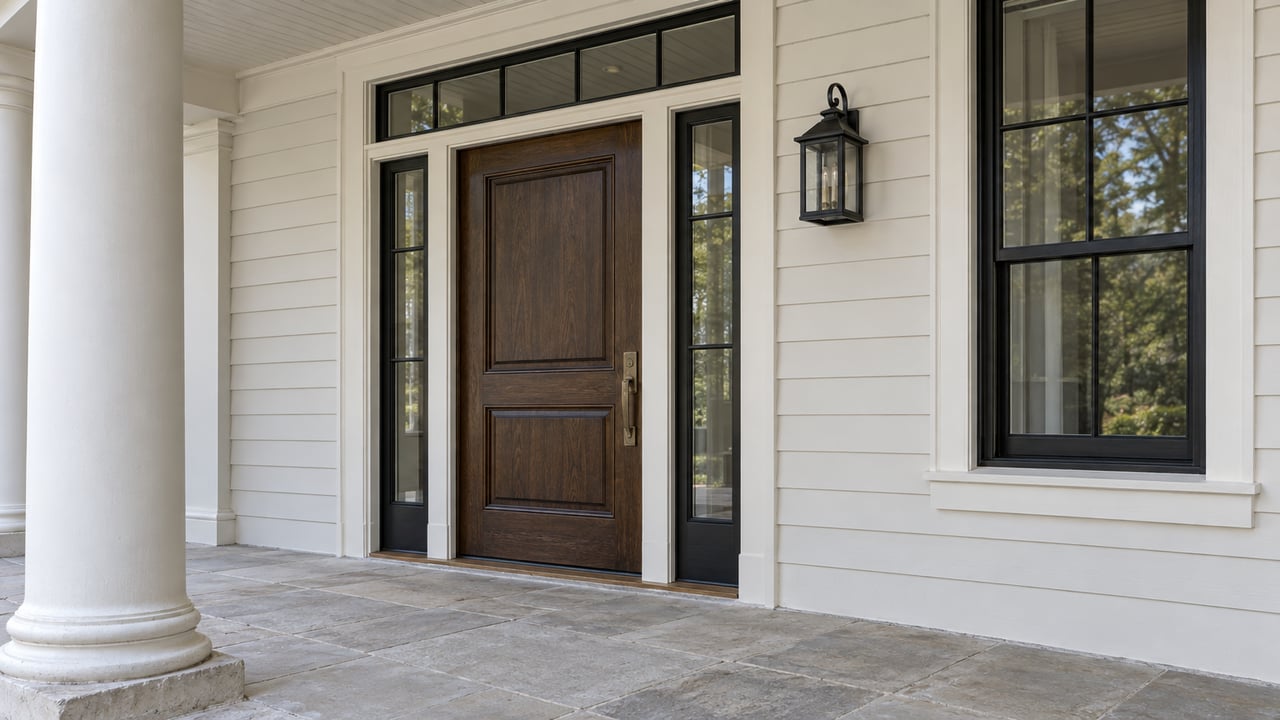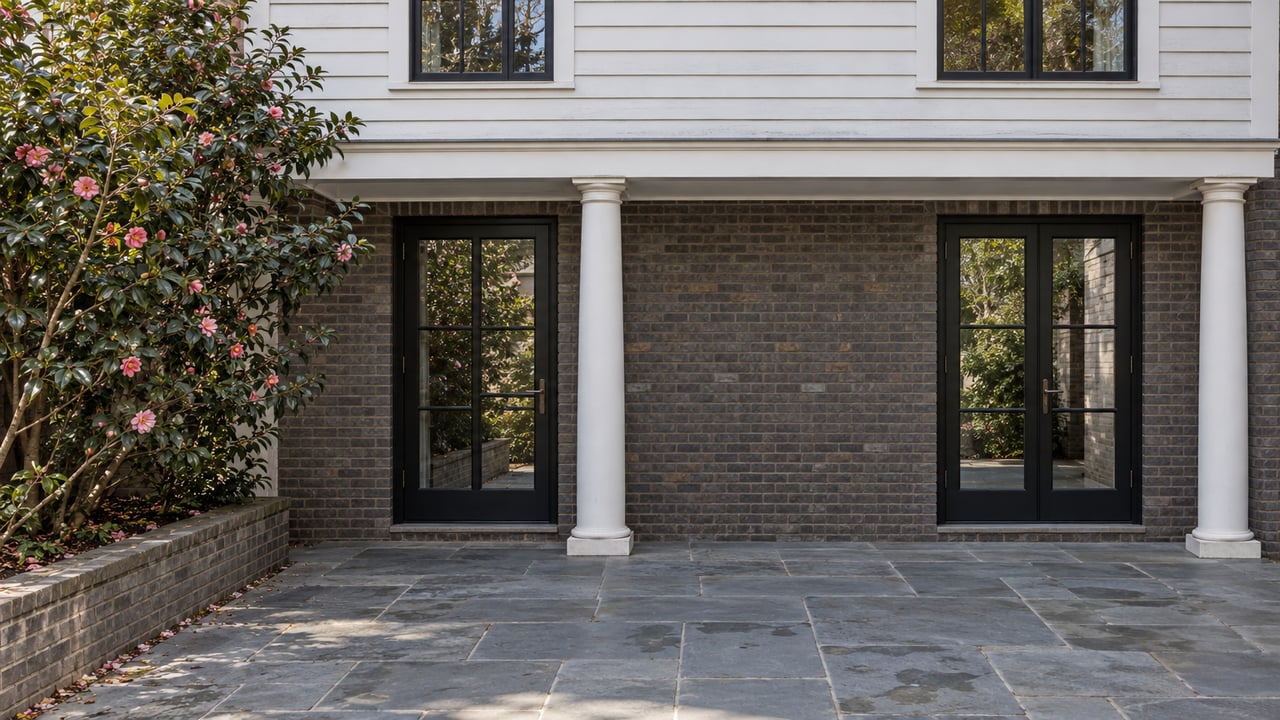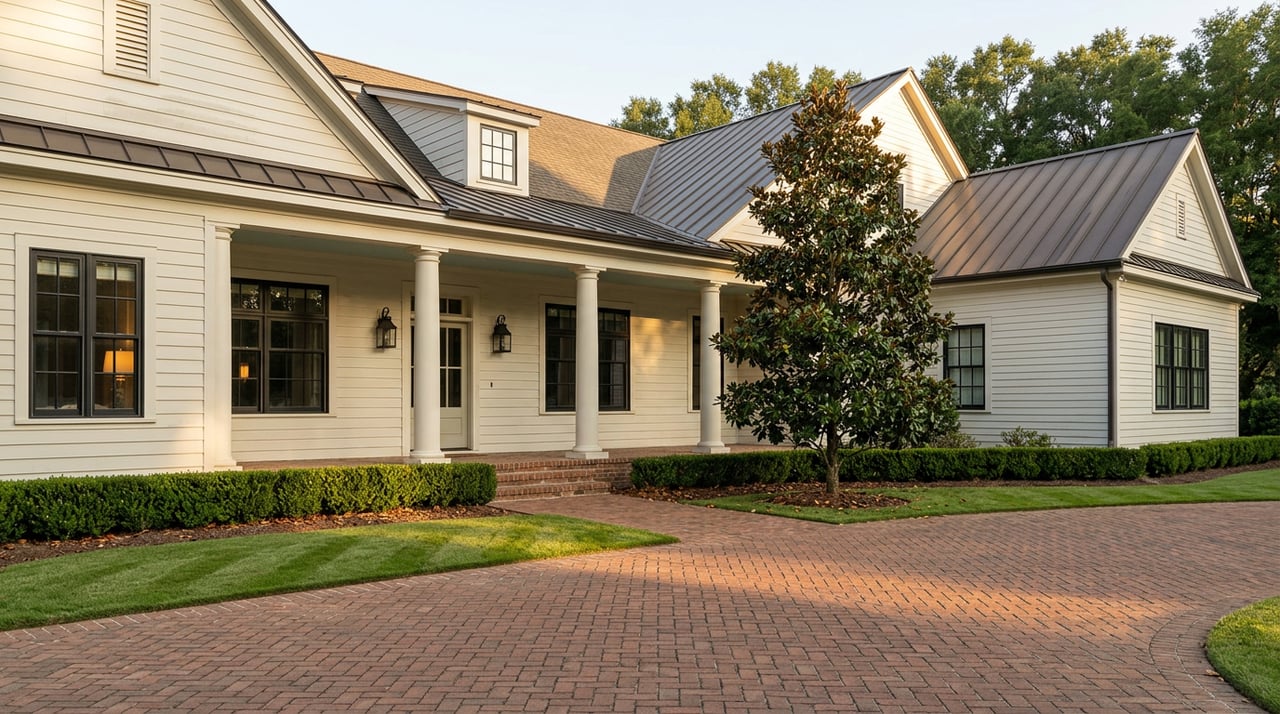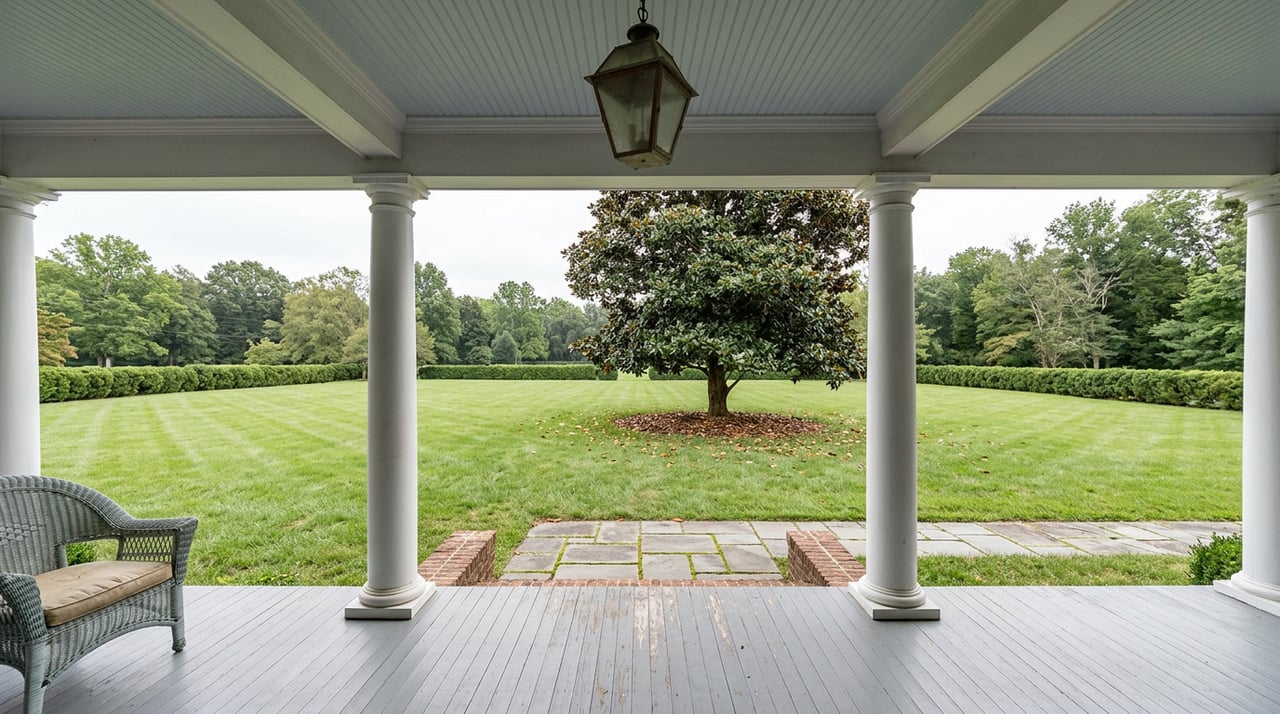
Ask that question on a Saturday drive through Weddington and you'll get the same puzzled look from anyone who's lived there more than a year. There isn't one. No Main Street, no restaurant row, no cluster of storefronts that reads as a center of town. Drive the length of Providence Road or Weddington Road and you'll pass gated entrances, split-rail fencing, mature hardwoods, and very little else zoned for business.
For a buyer relocating from a city with a walkable core, or comparing Weddington against Waxhaw's brick-front downtown a few miles south, that absence can look like an oversight, a town that simply hasn't gotten around to building one yet. It isn't. Weddington's lack of a commercial center is a policy choice made more than four decades ago, and understanding why matters more than the median price tag if you're trying to figure out whether this town fits how you actually want to live.
The Incorporation That Explains Everything
Weddington's own Comprehensive Land Use Plan tells the story plainly. The area was farmland into the 1970s, when Charlotte's growth started pushing subdivisions and traffic across the county line. Local leaders, worried about losing control of that growth to annexation, petitioned the North Carolina General Assembly for incorporation. The town became official on May 2, 1983, and four years later, in 1987, it adopted its first zoning and subdivision regulations specifically to protect its rural character.
That's the whole mechanism in two sentences. Weddington didn't incorporate to build a town center. It incorporated to prevent one, or at least to prevent Charlotte's version of one from arriving unchecked. Every zoning decision since has followed from that founding instinct: preserve large lots, limit density, and keep commercial development to the margins.
It worked. Compare that to Waxhaw, which built its identity around a historic downtown district with retail and dining anchoring the town's brand. Weddington took the opposite path on purpose, and the town's current land use plan still describes protecting that rural feel as a stated goal, not a historical footnote.
What That Choice Looks Like on the Ground
The practical result is a town that is almost entirely single-family residential, connected by winding roads rather than organized around a commercial core. Retail, dining, and entertainment sit just outside town limits, a short drive into Waxhaw, Marvin, or Charlotte's Ballantyne. That's not a gap waiting to be filled. It's the town functioning as designed.
For a family that wants large lots, mature trees, and a quiet subdivision entrance, that's the appeal. For a buyer who assumed a town with this kind of price point would eventually build out a downtown to match, it's worth resetting that expectation before you write an offer, not after you've lived there for a year wondering when the coffee shop is coming.
A $346 Million Hospital Is Coming to a Town Built to Stay Small
Here's where the story gets more interesting than a zoning history lesson. In April 2026, Novant Health received state approval to build its first hospital in Union County. The facility, Novant Health Wesley Chapel Medical Center, will sit at 4719 Weddington Road, carry 32 beds, and represents a $346 million investment, according to Novant Health's own newsroom announcement and coverage from WBTV. It's expected to open in 2030, with an emergency department, imaging, labor and delivery, and surgical care.
This is not a corner urgent care clinic slotted into a strip center. It's a comprehensive community hospital, the kind of infrastructure typically built to serve a regional population, not a town that spent forty years zoning itself to stay small. Novant's own statement framed the need around Union County's broader growth, not Weddington specifically, which is the point. The hospital is landing on Weddington Road because that's where the land and the geography made sense for the county's needs, not because the town asked for a facility of this scale.
For anyone weighing Weddington as a long-term home, that's useful context. The hospital adds real value, closer emergency care and specialty services than the area has ever had, but it arrives as a regional project layered onto a town that never built the local commercial infrastructure to feel proportionate to a $346 million medical campus a few miles from your subdivision.
The Road That's Supposed to Help Isn't Close
The second piece of infrastructure moving through Weddington right now tells a similar story, but with a longer wait attached. NCDOT's project U-5769 will widen 5.7 miles of NC 16, Providence Road South, from Rea Road to Waxhaw Parkway, adding a raised median and reducing conflict at several intersections. The project is expected to affect roughly 170 parcels along the corridor.
The traffic numbers explain why the state considers this urgent. Current volume on that stretch runs around 20,000 vehicles a day, and NCDOT's own projections put that figure at 46,000 by 2040, more than double. Right-of-way acquisition has been underway and is expected to continue through roughly fiscal year 2028, which means construction on the widened road stretches well into the back half of this decade.
If you're buying in Weddington today with the expectation that Providence Road relief is right around the corner, it isn't. Plan your daily commute around the road as it exists now, not the four-lane version that's still years from completion. This is the kind of detail that a well-prepared buyer factors into their timeline, and one an out-of-town relocator often misses entirely until they're stuck behind the same left-turn backup every weekday morning.
Where the Two Projects Land Right Now
| Project | Status as of September 2026 | Expected Completion |
|---|---|---|
| Novant Health Wesley Chapel Medical Center | State approval granted April 2026 | 2030 |
| Providence Road widening (NC 16, U-5769) | Right-of-way acquisition underway | Construction extending toward the end of the decade |
Both projects are real, funded, and moving. Neither is close to finished. That gap between announcement and delivery is exactly where a lot of buyer expectations go sideways.
What the Tax Bill Still Looks Like
Despite all of that infrastructure heading Weddington's way, the town's own finances still read like a place that taxes itself for country roads, not hospital campuses and four-lane highways. For the current 2026 levy year, Weddington's municipal tax rate remains 3.5 cents per $100 of assessed value, according to the town's own tax page, a rate that has stayed essentially flat for years. Union County sets its own separate rate on top of that, and it reset lower after the county's most recent property revaluation. Because county rates can shift from one fiscal year to the next, it's worth confirming the current figure directly with Union County or the North Carolina Department of Revenue before you build a carrying-cost budget, rather than relying on a number that may already be a cycle old.
The takeaway isn't the exact combined rate. It's the mismatch. A town absorbing a $346 million hospital and a $95 million-plus highway widening is still governing itself, tax-wise, like the small rural town it incorporated to remain. That's part of what makes Weddington's math work for the buyer who wants space and schools without a heavy tax bill to match. It's also a reminder that low local taxes don't necessarily track with the pace of change happening around you.
What This Means If You're Comparing Weddington to Its Neighbors
If you want walkable retail and dining as part of daily life right now, Weddington isn't going to deliver that, not this year and not by design. Waxhaw's downtown corridor and Ballantyne's retail density solve for that need in ways Weddington's zoning was built to avoid.
If what you actually want is large-lot privacy, a top-ranked school cluster, and a low local tax rate, and you're comfortable driving a few minutes across a town line for dinner or errands, Weddington still delivers exactly what it was built to deliver in 1987. The hospital and the road widening are genuine upgrades headed this way. They just won't reshape the town's character, because the town's character was never up for negotiation in the first place.
A Few Questions Worth Asking Before You Write an Offer
When does the new hospital actually open? Novant Health's Wesley Chapel Medical Center received state approval in April 2026 and is expected to be complete in 2030. If proximity to a full-service hospital is part of your decision, plan around that 2030 timeline, not an assumption that it's already operating.
Will Providence Road ever get less congested? Relief is coming, but slowly. Right-of-way acquisition for the widening runs through roughly 2028, with construction continuing after that. Budget your daily commute around today's two-lane reality.
Is Weddington going to build a downtown eventually? Nothing in the town's current zoning or land use planning points that direction. The zoning that limits commercial development traces back to the same 1987 ordinance that followed incorporation, and the town's stated goal has consistently been preserving rural character, not adding a commercial core.
Weddington rewards buyers who understand what they're actually purchasing: land, schools, and quiet, with amenities a short drive away rather than a short walk. If you're weighing Weddington against Waxhaw, Marvin, or Ballantyne and want a clearer read on which town actually matches how you want to live day to day, Ashley & Scott Sofsian can walk you through the comparison block by block. Schedule your consultation and get the full picture before you write an offer.